Whitstable Windsurfing Guide
Kent, England
General Info
Windsurfing Ratings

Nearby Windsurfing Spots
Within 50km • 12Herne Bay
KentMinster, Isle Of Sheppey
KentMinnis Bay
KentEast Beach
EssexThorpe Bay
EssexSouthend On Sea
EssexChalkwell Beach
EssexHythe
KentCliffe Pools
KentMersea Island
EssexDungeness
KentClacton On Sea
EssexSpot Overview
The North Kent stretch of the Thames Estuary is home to Whitstable, and the legendary Yacht Club. Whitstable bay provides great flat water to bump and jump sailing. It is good for learning, but fairly challenging, at low to mid tide you can stand up. At this stage of tide the water is pretty flat so makes for good blasting and freestyle.
Whitstable can be windsurfed in a wide variety of directions from SW through to N through to SE. At low tide a sandbar is exposed that creates an area of protected water that has in the past been used as a speed strip.
Hazards & Spot Safety
Because it is the mouth of an Estuary the tides or currents can be strong. It is possible to drift quite quickly so be weary of this. Launching at hightide can also have it problems because of the steeper beach.
Wind & Swell Characteristics
The community aspect of the place is really good. There is a thriving yacht club with a great social scene and therefore plenty of windsurfers around. There is a nearby shop and school so it is a good place to get anyone into the sport.
On The Water
Shelving Rate
Travel & Directions
Head towards Margate, about 6 miles from the motorway, turn off for Whitstable and look out for a place called Tankerton. Follow the road which veers sharply right and look for a left turn, this is the parking so park where you can.
Community Photos 2
Photos uploaded by the Bigsalty Weather community for Whitstable
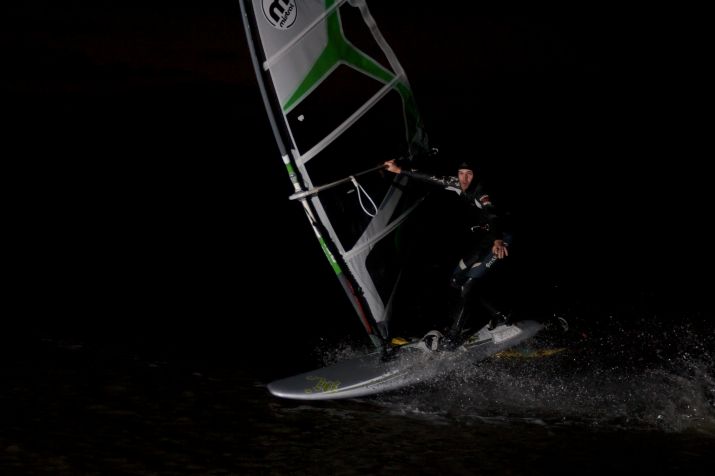
Dead flat on boxing day evening, taken from the street.

Taken from the "street" on boxing day. 4.7 weather super flat.